Physical Address
304 North Cardinal St.
Dorchester Center, MA 02124
Physical Address
304 North Cardinal St.
Dorchester Center, MA 02124
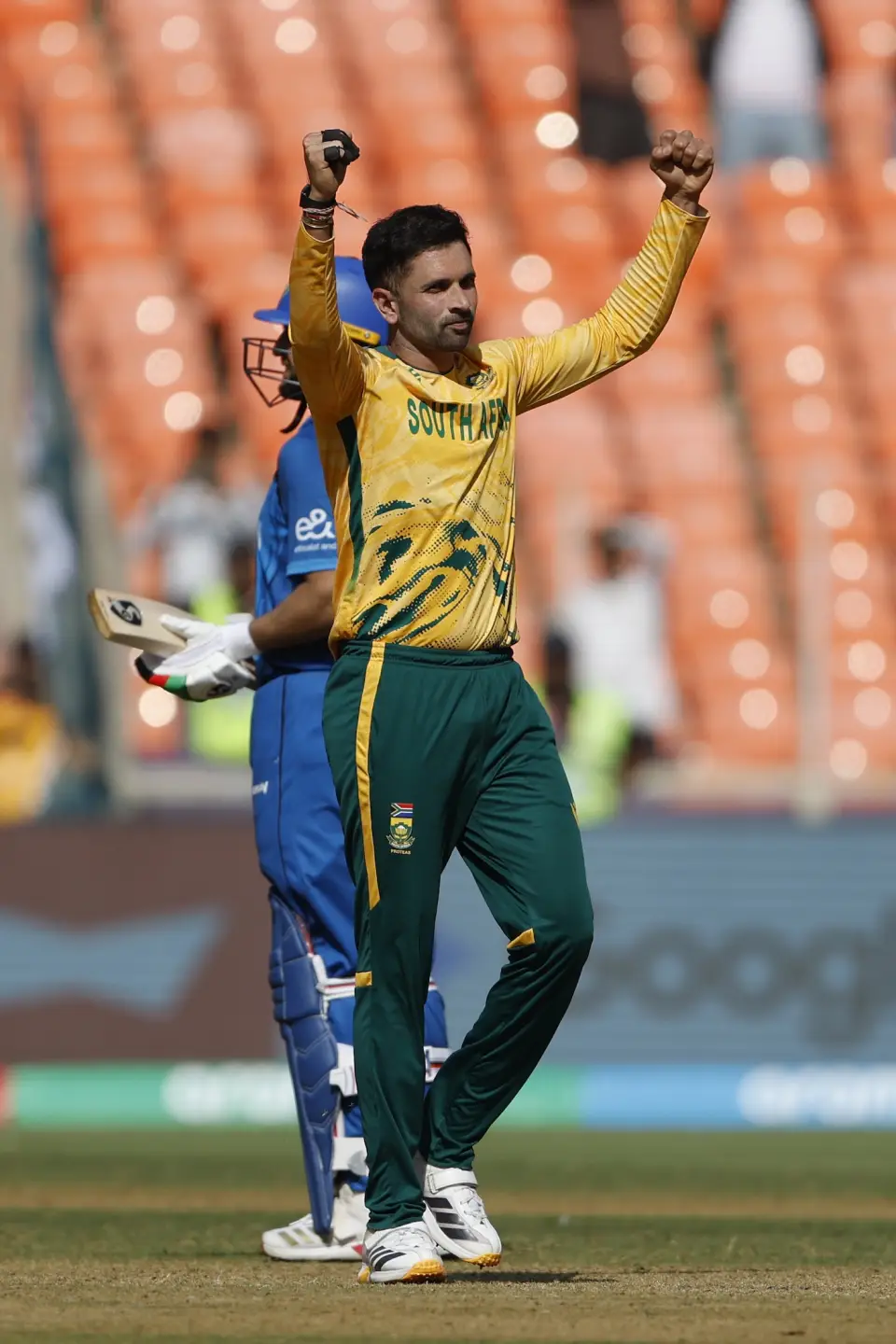
The rivalry timeline between the South Africa national cricket team and the Afghanistan national cricket team represents a unique clash of established dominance and emerging ambition. South Africa, known for its pace attack, deep batting lineup, and ICC tournament experience, entered every encounter as the clear favorite. Afghanistan, meanwhile, brought fearless cricket built on world-class spin bowling and rapid development at the international level. Over time, this matchup evolved from one-sided contests into more competitive battles filled with tactical shifts, emotional pressure, and standout individual performances. Each meeting added a new layer to the story, shaping a growing rivalry defined by respect, learning, and rising competitiveness on the global stage.
| Date | Format | Tournament/Series | Venue | Winner | Margin |
|---|---|---|---|---|---|
| 11 Feb 2026 | T20I | ICC Men’s T20 World Cup | Ahmedabad | South Africa | Tied (Won 2nd Super Over) |
| 21 Feb 2025 | ODI | ICC Champions Trophy | Karachi | South Africa | Won by 107 runs |
| 22 Sep 2024 | ODI | Bilateral Series | Sharjah | South Africa | Won by 7 wickets |
| 20 Sep 2024 | ODI | Bilateral Series | Sharjah | Afghanistan | Won by 177 runs |
| 18 Sep 2024 | ODI | Bilateral Series | Sharjah | Afghanistan | Won by 6 wickets |
| 26 Jun 2024 | T20I | ICC Men’s T20 World Cup | Tarouba | South Africa | Won by 9 wickets |
| 10 Nov 2023 | ODI | ICC Cricket World Cup | Ahmedabad | South Africa | Won by 5 wickets |
| 15 Jun 2019 | ODI | ICC Cricket World Cup | Cardiff | South Africa | Won by 9 wickets |
| 20 Mar 2016 | T20I | ICC World Twenty20 | Mumbai | South Africa | Won by 37 runs |
| 05 May 2010 | T20I | ICC World Twenty20 | Bridgetown | South Africa | Won by 59 runs |
| Format | Total Matches | South Africa Wins | Afghanistan Wins | Tied / No Result |
|---|---|---|---|---|
| ODI | 6 | 4 | 2 | 0 |
| T20I | 4 | 4 | 0 | 1 (SA won via Super Over) |
| Test | 0 | 0 | 0 | 0 |
| Total | 10 | 8 | 2 | 1 |
| Player | Team | Performance Metric | Match and Date |
|---|---|---|---|
| Rahmanullah Gurbaz | Afghanistan | 105 Runs (ODI Batting) | Sharjah, 20 Sep 2024 |
| Rahmanullah Gurbaz | Afghanistan | 84 Runs off 42 balls (T20I Batting) | Ahmedabad, 11 Feb 2026 |
| Ryan Rickelton | South Africa | 61 Runs and Player of Match (T20I) | Ahmedabad, 11 Feb 2026 |
| Rashid Khan | Afghanistan | 5/19 (ODI Bowling) | Sharjah, 20 Sep 2024 |
| Fazalhaq Farooqi | Afghanistan | 4/35 (ODI Bowling) | Sharjah, 18 Sep 2024 |
| Marco Jansen | South Africa | 3/16 (T20I Bowling) | Tarouba, 26 Jun 2024 |
| Lungi Ngidi | South Africa | 3/26 (T20I Bowling) | Ahmedabad, 11 Feb 2026 |
| Type of Match | Margin of Victory | Format | Winner | Match Date |
|---|---|---|---|---|
| Biggest Win (Runs) | 177 runs | ODI | Afghanistan | 20 Sep 2024 |
| Biggest Win (Wickets) | 9 wickets | ODI / T20I | South Africa | 15 Jun 2019 and 26 Jun 2024 |
| Biggest Win (Balls Left) | 67 balls remaining | T20I | South Africa | 26 Jun 2024 |
| Closest Match (T20I) | Tied (Won in 2nd Super Over) | T20I | South Africa | 11 Feb 2026 |
| Closest Match (ODI) | 5 wickets (15 balls left) | ODI | South Africa | 10 Nov 2023 |
The first meeting between South Africa and Afghanistan marked a classic clash of experience versus emerging ambition. South Africa entered as a dominant full-member nation with a strong pace attack and stable batting order, while Afghanistan brought raw energy, fearless intent, and world-class spin potential. The early overs clearly showed the gap in experience, but Afghanistan’s fighting spirit stood out. Their bowlers tried to restrict scoring through tight spin lines, while South Africa relied on disciplined batting partnerships. The match set the tone for a rivalry that would grow slowly but meaningfully over time, highlighting respect between two very different cricketing journeys.
| Match Stage | Winning Team | Performance Highlight | Season | Key Factor |
|---|---|---|---|---|
| First ODI Clash | South Africa | Top order dominance | Early era | Experience gap |
| Early Overs | South Africa | Controlled batting pace | Same season | Spin challenge |
| Afghanistan effort | South Africa | Tight bowling spells | Same season | Pressure handling |
| Overall Impact | South Africa | Comfortable win | Debut meeting | Learning phase |
In the early ODI encounters, South Africa consistently showcased their superior technique and game awareness. Their bowlers exploited bounce and seam movement effectively, making scoring difficult for Afghanistan’s young batting lineup. Afghanistan, however, began learning quickly from each defeat. Their spinners improved control, and middle-order batters started showing resistance under pressure. Even though South Africa remained dominant on the scoreboard, Afghanistan’s gradual improvement became visible. These matches were less about rivalry intensity and more about experience building. South Africa’s professionalism often turned games into controlled victories, but Afghanistan’s progress hinted that future contests would be much closer.
| Match Stage | Winning Team | Performance Highlight | Season | Key Factor |
|---|---|---|---|---|
| ODI Series Start | South Africa | Bowling dominance | Early series | Seam attack |
| Middle overs play | South Africa | Batting stability | Same phase | Experience |
| Afghanistan response | South Africa | Spin improvement | Early era | Learning curve |
| Series outcome | South Africa | Clean control | Same season | Skill gap |
World Cup encounters between these two sides elevated the rivalry to another level. South Africa carried immense pressure as a top-ranked team expected to perform, while Afghanistan played with freedom and unpredictability. The pressure moments defined the matches, especially during middle overs where wickets fell rapidly. South African fast bowlers often struck early, but Afghanistan’s lower order occasionally resisted with grit. These games highlighted mental toughness more than pure skill. Afghanistan’s fearless batting approach occasionally disrupted South Africa’s rhythm, but experience usually prevailed in crunch moments. The emotional intensity of ICC events added a new layer to their rivalry story.
| Match Stage | Winning Team | Performance Highlight | Season | Key Factor |
|---|---|---|---|---|
| World Cup clash | South Africa | Early wicket bursts | ICC event | Pressure handling |
| Middle overs | South Africa | Controlled chase | Same tournament | Experience |
| Afghanistan fightback | South Africa | Lower-order resistance | Same event | Fearless intent |
| Final result | South Africa | Tactical win | ICC stage | Composure |
This phase of the rivalry is defined by contrasting cricket philosophies. South Africa built their strategy around raw pace, bounce, and aggressive field setups designed to intimidate batters. Afghanistan countered with spin-heavy attacks, aiming to choke runs and force mistakes. Over time, both teams evolved. South Africa improved their handling of spin bowling, while Afghanistan learned to survive high-speed deliveries and short-pitched attacks. Tactical battles became more visible in powerplays and middle overs, where match momentum frequently shifted. This phase showed how cricket intelligence evolved alongside physical skill.
| Match Stage | Winning Team | Performance Highlight | Season | Key Factor |
|---|---|---|---|---|
| Powerplay battle | South Africa | Fast bowling impact | Mid era | Pace attack |
| Spin control phase | South Africa | Run restriction | Same period | Afghanistan spin |
| Tactical shift | South Africa | Field adjustments | Evolving phase | Strategy |
| Match control | South Africa | Balanced dominance | Same era | Adaptation |
This stage of the timeline highlights standout individual performances that shaped the narrative of the rivalry. South African batters delivered commanding centuries built on technique and patience, while Afghan spinners produced match-defining spells that challenged top-order stability. Certain matches saw explosive partnerships that completely shifted momentum. Player rivalries began forming, especially between Afghan spin bowlers and South African top-order batters. These duels added emotional intensity and fan engagement. Every match now had a hero, making the rivalry more personal and less predictable compared to earlier one-sided contests.
| Match Stage | Winning Team | Performance Highlight | Season | Key Factor |
|---|---|---|---|---|
| Batting dominance | South Africa | Century partnerships | Mid era | Top order strength |
| Bowling impact | South Africa | Spin breakthroughs | Same phase | Key wickets |
| Player duel | South Africa | Star performances | Ongoing era | Individual brilliance |
| Match impact | South Africa | Game-changing spells | Same season | Momentum shift |
In recent years, Afghanistan has transformed into a much more competitive side. Their batting lineup has become more stable, and their bowling attack more versatile. Against South Africa, they now show stronger resistance and tactical awareness. Matches that were once one-sided are now competitive for longer periods. Afghanistan’s spinners continue to be their biggest strength, but improvements in pace bowling and finishing ability have made them a more complete team. South Africa still holds an edge, but the gap has clearly narrowed, making every encounter more unpredictable and exciting.
| Match Stage | Winning Team | Performance Highlight | Season | Key Factor |
|---|---|---|---|---|
| Modern ODI | South Africa | Balanced team effort | Recent era | Experience |
| Afghanistan rise | South Africa | Improved batting | Same period | Growth |
| Competitive phase | South Africa | Close match situations | Ongoing | Reduced gap |
| Current rivalry | South Africa | Tight finishes | Recent seasons | Skill parity |
The South Africa vs Afghanistan cricket timeline reflects how modern international cricket evolves through experience and exposure. South Africa’s consistency, discipline, and depth have often secured victories, especially in high-pressure ICC environments. However, Afghanistan’s rise has transformed the narrative from predictable outcomes to competitive and strategic encounters. Their spin attack, improved batting resilience, and fearless mindset have gradually narrowed the gap. While South Africa still holds the upper hand historically, the rivalry now carries greater balance and anticipation. Each future clash promises tighter contests, tactical battles, and emotional intensity, making this an evolving cricket story rather than a finished chapter in international competition.
What is the South Africa vs Afghanistan cricket rivalry timeline?
The timeline covers all international matches between South Africa and Afghanistan, showing how experience, tactics, and player performances evolved from one-sided early games to more competitive modern encounters over time.
Who has won more matches between South Africa and Afghanistan?
South Africa has dominated most encounters historically due to stronger batting depth, pace attack, and ICC experience, while Afghanistan is still developing consistency at the highest international level.
When did South Africa and Afghanistan first play each other?
Their first official meeting came in ICC limited-overs competition, where South Africa’s experience and bowling strength secured control, though Afghanistan showed early signs of potential and fighting spirit.
What makes Afghanistan competitive against South Africa?
Afghanistan’s spin bowling attack, fearless batting approach, and rapid improvement in international exposure help them challenge South Africa, especially by creating pressure in middle overs and key match moments.
Will Afghanistan become stronger in future matches?
Yes, Afghanistan’s steady rise in batting depth, bowling variety, and big-match experience suggests future encounters with South Africa will be closer, more tactical, and highly competitive in global tournaments.