Physical Address
304 North Cardinal St.
Dorchester Center, MA 02124
Physical Address
304 North Cardinal St.
Dorchester Center, MA 02124
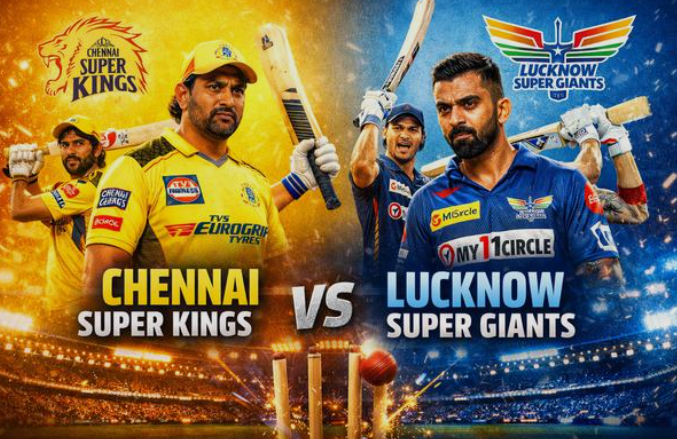
The modern Indian Premier League has created several fresh matchups that quickly capture attention, and this contest between Lucknow Super Giants and Chennai Super Kings stands out for its contrast of experience and ambition. One side represents a legacy of calm leadership and consistent success, while the other reflects a new generation built on fearless intent and adaptability. Across their encounters, matches have delivered tight finishes, tactical battles, and emotional swings that keep fans engaged. From powerplay pressure to death over drama, every phase has shaped this growing cricket rivalry into one of the most intriguing narratives in recent seasons.
| Date | Venue | Winner | Margin | First Innings | Second Innings | Player of Match |
| 15 May 2026 | Lucknow | Lucknow Super Giants | 7 wickets | Chennai Super Kings 187/5 | Lucknow Super Giants 188/3 | Mitchell Marsh |
| 10 May 2026 | Chennai | Chennai Super Kings | 5 wickets | Lucknow Super Giants 203/8 | Chennai Super Kings 208/5 | Jamie Overton |
| 14 April 2025 | Chennai | Chennai Super Kings | 5 wickets | Lucknow Super Giants 166/7 | Chennai Super Kings 168/5 | MS Dhoni |
| 23 April 2024 | Chennai | Lucknow Super Giants | 6 wickets | Chennai Super Kings 210/4 | Lucknow Super Giants 213/4 | Marcus Stoinis |
| 19 April 2024 | Lucknow | Lucknow Super Giants | 8 wickets | Chennai Super Kings 176/6 | Lucknow Super Giants 180/2 | KL Rahul |
| 03 May 2023 | Lucknow | No Result | Abandoned | Lucknow Super Giants 125/7 | Rain Interruption | None |
| 03 April 2023 | Chennai | Chennai Super Kings | 12 runs | Chennai Super Kings 217/7 | Lucknow Super Giants 205/7 | Moeen Ali |
| Metric | Lucknow Super Giants | Chennai Super Kings |
| Total Matches Played | 7 | 7 |
| Total Matches Won | 3 | 3 |
| Highest Team Score | 213 | 217 |
| Lowest Team Score | 125 | 176 |
| Matches Won Batting First | 0 | 2 |
| Matches Won Chasing | 3 | 1 |
| Abandoned Matches | 1 | 1 |
| Player | Team | Innings | Runs | Highest Score | Strike Rate | Fifties |
| Ruturaj Gaikwad | Chennai Super Kings | 6 | 238 | 108 | 148.55 | 1 |
| Shivam Dube | Chennai Super Kings | 7 | 158 | 57 | 162.40 | 1 |
| KL Rahul | Lucknow Super Giants | 4 | 142 | 82 | 142.34 | 1 |
| Nicholas Pooran | Lucknow Super Giants | 6 | 138 | 34 | 165.25 | 0 |
| Ayush Badoni | Lucknow Super Giants | 6 | 128 | 55 | 159.74 | 1 |
| Marcus Stoinis | Lucknow Super Giants | 4 | 124 | 124 | 172.82 | 1 |
| Mitchell Marsh | Lucknow Super Giants | 2 | 105 | 90 | 215.30 | 1 |
| Bowler | Team | Overs | Wickets | Best Bowling | Economy | Strike Rate |
| Ravi Bishnoi | Lucknow Super Giants | 20.0 | 8 | 3/28 | 7.45 | 15.00 |
| Moeen Ali | Chennai Super Kings | 14.0 | 6 | 4/26 | 6.85 | 14.00 |
| Matheesha Pathirana | Chennai Super Kings | 16.0 | 5 | 2/29 | 7.90 | 19.20 |
| Akash Singh | Lucknow Super Giants | 8.0 | 4 | 3/26 | 7.75 | 12.00 |
| Krunal Pandya | Lucknow Super Giants | 15.0 | 3 | 2/16 | 7.20 | 30.00 |
| Ravindra Jadeja | Chennai Super Kings | 18.0 | 3 | 1/21 | 7.55 | 36.00 |
| Tushar Deshpande | Chennai Super Kings | 15.0 | 3 | 2/43 | 8.90 | 30.00 |
The arrival of a new franchise into a well established tournament changed the competitive atmosphere in a noticeable way. A side built on modern thinking and aggressive intent entered a space long controlled by experience and consistency. This contrast created instant curiosity among fans, who were eager to see how the newer team would handle pressure against a proven champion side. Training sessions, pre match discussions, and early team selections already hinted at different philosophies. One team focused on structured planning and calm execution, while the other leaned toward fearless cricket and flexible strategies. Even before the first ball was bowled, expectations were high on both sides. The emotional build up was not driven by rivalry history but by the clash of identity. Each meeting promised something new, as neither team had fully settled into dominance. This foundation slowly shaped a competitive storyline where every match felt like a test of adaptation, patience, and tactical awareness under pressure.
| Match Phase | Dominant Style | Key Factor | Impact Level |
| Powerplay | Controlled start | Field setup | Medium |
| Middle overs | Strategic buildup | Spin control | High |
| Death overs | Aggressive finish | Execution | Very High |
| Overall flow | Tactical balance | Captain decisions | High |
The first clash between these two teams carried more tension than experience suggested. Fans were unsure how the newer squad would respond against a team known for calm dominance and match awareness. From the first over, the energy inside the stadium reflected curiosity and pressure at the same time. Early wickets immediately shifted crowd emotions, creating contrasting reactions in different sections of supporters. Batters struggled to settle as bowlers used disciplined lines and smart variations. Every run was celebrated or defended with equal intensity, showing how closely contested the match felt. The chase or total never looked fully secure for either side, as momentum kept shifting. Even fielding moments like sharp catches and direct hits added layers of drama. The scorecard reflected a narrow contest where small partnerships mattered more than big individual innings. By the end, the match became less about dominance and more about learning, setting the base for future competitive encounters between the sides.
| Phase | Batting Approach | Bowling Strategy | Crowd Reaction | Impact |
| Powerplay | Careful start | Swing attack | Nervous | Balanced |
| Middle overs | Rotation play | Spin pressure | Mixed | Shifting |
| Death overs | Controlled risk | Yorkers | Loud | Decisive |
| Final overs | High intent | Defensive setup | Intense | Crucial |
Leadership shaped the direction of these encounters more than raw performance at times. One captain relied on experience, reading situations calmly and trusting proven methods. The other captain preferred adaptability, adjusting strategies quickly based on match flow. This created a tactical duel within every game, where decisions often influenced momentum as much as player performance. Field placements changed frequently, reflecting constant analysis of batters’ weaknesses. Bowling changes were used not only to restrict runs but also to create psychological pressure. Batting orders were also adjusted to maximize flexibility and exploit match situations. Players responded differently to these leadership styles, with some thriving under stability and others excelling in aggressive freedom. Communication on the field became a silent weapon, shaping confidence and execution. Even when statistics did not show clear differences, leadership impact was visible in crucial moments where small decisions turned into match defining outcomes.
| Leadership Factor | Experienced Style | Adaptive Style | Match Effect |
| Field setup | Structured | Flexible | Tactical |
| Bowling changes | Planned | Reactive | Dynamic |
| Batting order | Stable | Experimental | Variable |
| Pressure handling | Calm | Aggressive | Mixed |
Bowling played a central role in shaping outcomes between these teams. One side focused heavily on spin control, disciplined lines, and building pressure through dot balls. The other relied on pace variation, sharp yorkers, and unexpected slower deliveries. This contrast created constant battles across different phases of the innings. Powerplay overs were often about early breakthroughs, while middle overs became a test of patience and control. Bowlers who managed to break partnerships at the right moment shifted the entire match direction. Captains used field placements strategically, packing the off side or protecting boundaries depending on the situation. Mistakes were quickly punished, showing how evenly matched the teams were in terms of batting depth. Over time, both sides improved their planning, learning from previous encounters and adjusting their bowling patterns. This continuous adaptation turned bowling into one of the most decisive factors in the rivalry.
| Phase | Key Skill | Success Factor | Pressure Level | Outcome Role |
| Powerplay | Swing | Early wickets | High | Setting tone |
| Middle overs | Spin control | Dot balls | Very High | Stability |
| Death overs | Yorkers | Accuracy | Extreme | Match defining |
| Pressure overs | Variations | Reading batters | High | Game shift |
Batting performances often depended on anchors who could manage pressure and build innings steadily. Experienced batters focused on stability, rotating strike and avoiding risky shots early in the innings. Younger batters brought aggression and intent, often attempting to shift momentum quickly. However, the real challenge came when early wickets fell and pressure increased. Anchors played a crucial role in rebuilding innings and ensuring teams reached competitive totals. Shot selection became extremely important, especially against spin in the middle overs. Field restrictions and bowling variations forced constant adjustments in approach. Some innings stood out not for explosive hitting but for controlled resistance under pressure. Partnerships became more valuable than individual brilliance in many cases. These batting efforts highlighted how temperament and decision making often mattered as much as technique in determining match outcomes.
| Role | Responsibility | Key Skill | Pressure Handling | Contribution |
| Anchor | Stability | Strike rotation | High | Consistent |
| Aggressor | Momentum | Power hitting | Medium | Explosive |
| Middle order | Balance | Adaptability | High | Support |
| Finisher | Closure | Timing | Extreme | Decisive |
The middle overs became one of the most decisive phases in these matches. This period was less about boundaries and more about control, patience, and strategic planning. Spinners dominated the game during this phase, forcing batters into defensive or calculated attacking approaches. A single over with back to back boundaries often changed the entire momentum. Bowlers aimed to restrict scoring through dot balls and tight field setups. Batters who rotated strike effectively reduced pressure and built platforms for strong finishes. However, misjudged aggression often led to quick wickets and sudden collapses. Captains constantly adjusted plans based on pitch behavior and batter mindset. This phase may not have produced the highest excitement, but it frequently determined final outcomes. Every run and every dot ball in this stage carried amplified importance in the closing overs.
| Factor | Batting Impact | Bowling Impact | Match Influence | Risk Level |
| Dot balls | Pressure build | Control | High | Medium |
| Singles | Stability | Field setup | Medium | Low |
| Boundaries | Momentum shift | Disruption | Very High | High |
| Wickets | Collapse risk | Advantage gain | Critical | Extreme |
The final overs brought the most dramatic moments in these encounters. Matches often reached tense endings where every ball could change the result. Experienced finishers relied on calm decision making and precise execution, while younger batters depended on power and instinct. Bowlers responded with yorkers, slower balls, and wide variations to limit scoring opportunities. Field placements became highly strategic, designed to cut off boundaries and force mistakes. Even small errors like misfields or timing mistakes had huge consequences. Over time, both teams improved their death over strategies based on previous experiences. This evolution made later matches more competitive and unpredictable. Fans often witnessed last over finishes that kept results uncertain until the final delivery. These closing moments became the defining identity of the rivalry, creating lasting memories and shaping expectations for future matches.
| Element | Batting Strategy | Bowling Strategy | Pressure Level | Outcome Effect |
| Yorkers | Timing focus | Precision | Extreme | Defensive |
| Slower balls | Power adjustment | Variation | High | Balanced |
| Boundaries | Risk taking | Field spread | Very High | Decisive |
| Final over | Calm execution | Tactical planning | Maximum | Match deciding |
This evolving contest highlighted how experience and innovation can push each other to higher standards. Every match contributed new lessons in strategy, temperament, and execution under pressure. Players on both sides delivered memorable performances that shaped outcomes and strengthened the competitive spirit between the teams. From early uncertainty to closely fought battles, the journey reflected growth, adaptation, and rising intensity. Fans were treated to thrilling finishes and shifting momentum that kept anticipation alive for future meetings. As the rivalry continues to develop, it promises even more dramatic moments, sharper strategies, and performances that will further enrich its growing legacy in the tournament.