Physical Address
304 North Cardinal St.
Dorchester Center, MA 02124
Physical Address
304 North Cardinal St.
Dorchester Center, MA 02124
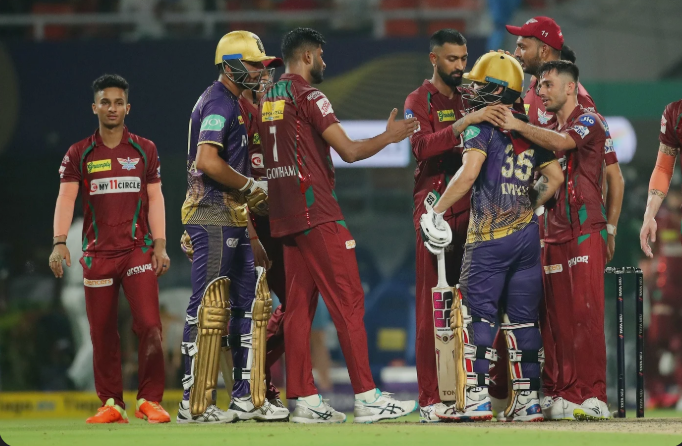
The timeline between two competitive IPL sides has grown into an exciting modern cricket storyline filled with intensity, tactical battles, and shifting momentum. From their very first meeting, both teams showcased contrasting styles that immediately caught attention, one relying on explosive power hitting and the other on calculated game management. Over time, their encounters have produced thrilling finishes, standout individual performances, and unforgettable pressure moments that have shaped their head-to-head history. Each match added a new layer to their developing rivalry, turning simple league fixtures into high-stakes contests where strategy and execution mattered as much as talent on the field.
| Match Date | Venue | Winner | Margin | Top Scorer | Best Bowler | Match ID |
| April 26, 2026 | Lucknow | KKR | Super Over | Rinku Singh 83 | Mohsin Khan 5/23 | Match 38 |
| April 9, 2026 | Kolkata | LSG | 3 wickets | Mukul Choudhary 54 | Sunil Narine 1/13 | Match 15 |
| April 8, 2025 | Kolkata | LSG | 4 runs | Nicholas Pooran 87 | Sunil Narine 1/32 | Match 21 |
| May 5, 2024 | Lucknow | KKR | 98 runs | Sunil Narine 81 | Varun Chakaravarthy 3/12 | Match 54 |
| April 14, 2024 | Kolkata | KKR | 8 wickets | Phil Salt 89 | Mitchell Starc 3/28 | Match 28 |
| May 20, 2023 | Kolkata | LSG | 1 run | Nicholas Pooran 58 | Ravi Bishnoi 2/23 | Match 68 |
| May 18, 2022 | Navi Mumbai | LSG | 2 runs | Quinton de Kock 140 | Mohsin Khan 3/20 | Match 66 |
| Metric | Kolkata Knight Riders | Lucknow Super Giants |
| Total Matches Played | 8 | 8 |
| Total Wins | 3 | 5 |
| Highest Team Total | 235 | 238 |
| Lowest Team Total | 101 | 137 |
| Average First Innings Runs | 178 | 182 |
| Wins Batting First | 1 | 3 |
| Wins Chasing Target | 2 | 2 |
| Player Name | Team | Matches | Innings | Total Runs | Highest Score | Strike Rate |
| Nicholas Pooran | LSG | 6 | 6 | 258 | 87 | 168.62 |
| Rinku Singh | KKR | 7 | 6 | 214 | 83 | 152.85 |
| Quinton de Kock | LSG | 5 | 5 | 208 | 140 | 145.45 |
| Sunil Narine | KKR | 8 | 8 | 165 | 81 | 161.76 |
| Marcus Stoinis | LSG | 6 | 6 | 132 | 47 | 134.69 |
| Shreyas Iyer | KKR | 6 | 6 | 128 | 50 | 125.49 |
| Deepak Hooda | LSG | 5 | 4 | 98 | 41 | 122.50 |
| Bowler Name | Team | Matches | Overs | Wickets Taken | Best Bowling | Economy Rate |
| Sunil Narine | KKR | 8 | 32.0 | 11 | 3/21 | 6.45 |
| Mohsin Khan | LSG | 5 | 19.0 | 10 | 5/23 | 7.15 |
| Varun Chakaravarthy | KKR | 8 | 30.4 | 9 | 3/12 | 7.82 |
| Ravi Bishnoi | LSG | 6 | 23.0 | 7 | 2/23 | 7.40 |
| Andre Russell | KKR | 7 | 16.5 | 6 | 2/22 | 8.90 |
| Mitchell Starc | KKR | 4 | 15.0 | 5 | 3/28 | 8.53 |
| Naveen-ul-Haq | LSG | 4 | 15.2 | 4 | 2/42 | 8.85 |
The early phase of this competitive journey began with two franchises entering the same space with very different expectations. One side already carried the weight of past success and a strong fan base, while the other arrived as a fresh unit looking to prove itself in a demanding league environment. The anticipation before their first meeting was intense because fans wanted to see how experience would handle new ambition. The tactical contrast was already clear, with one team relying heavily on spin control and all round depth, while the other focused on structured batting and flexible bowling combinations. Stadium buzz reflected curiosity more than rivalry at this stage, but every over bowled and every wicket taken slowly built the foundation of something more competitive. That first clash set the tone for how closely fought future encounters would become, especially in middle overs where both sides tested each other’s strengths.
| Match Phase | Key Focus | Tactical Style | Crowd Reaction |
| Pre Match | Team balance | Strategy planning | High curiosity |
| Powerplay | Fast scoring | Aggressive intent | Energetic |
| Middle Overs | Control game | Spin vs anchors | Tense silence |
| Death Overs | Finishing strength | Risk execution | Loud excitement |
The first official meeting between these teams carried more pressure than expected because both squads had something to prove. Early overs showed caution from both batting units as they assessed pitch behavior and bowling rhythm. One side tried to accelerate quickly through boundaries, while the other focused on building partnerships before launching late innings attacks. The turning point came during the middle overs when spin variations and slower deliveries disrupted the batting flow, leading to quick wickets. The chase or defense phase became highly unpredictable, with momentum shifting almost every few overs. Players who were expected to dominate found themselves under pressure due to disciplined bowling plans. The final overs brought excitement as finishing hitters tried to rescue the situation, but calculated bowling execution ensured control remained with the defending side. This match created the first emotional spark between fans and established a competitive tone for all future meetings.
| Team | Top Scorer | Bowling Highlight | Key Moment |
| Side A | Top order batter | Spin impact | Middle collapse |
| Side B | Anchor batter | Pace variation | Death overs control |
| Side A | Finisher | Tight yorkers | Late surge attempt |
| Side B | All rounder | Wicket burst | Game turning over |
As encounters increased, both teams began adapting quickly to each other’s strengths and weaknesses. One side focused on breaking partnerships early by introducing attacking field placements and rotating bowlers more frequently, while the opposition started building deeper batting plans around anchor players. Analysts played a growing role in identifying matchup advantages, especially targeting specific bowlers during powerplay overs. Captaincy decisions became more aggressive, with bold bowling changes and unexpected batting promotions. Fielding intensity also increased, turning singles into pressure moments. Each team started preparing differently for death overs, often saving their best bowlers for high pressure situations. This phase marked the shift from casual competition to structured rivalry where every decision mattered. Even small tactical changes, such as switching bowling ends or adjusting field gaps, had visible impact on outcomes. The rivalry matured into a chess match where patience and planning became as important as raw talent.
| Tactical Area | Team Approach | Adjustment Style | Impact Level |
| Powerplay | Aggressive bowling | Early wickets plan | High |
| Middle Overs | Spin control | Batting anchors focus | Very High |
| Death Overs | Pace variation | Yorker strategy | Critical |
| Field Setup | Dynamic changes | Matchup focus | High |
One of the most dramatic encounters between these sides resembled a knockout style battle even without playoff stakes. The match began with early breakthroughs that immediately raised tension on both benches. Batters struggled to rotate strike under tight field setups, and scoring opportunities became rare. A crucial partnership briefly stabilized the innings, but momentum shifted again when a sudden bowling spell triggered a collapse. The chase became a test of nerves rather than skill alone, with required run rates climbing steadily. Fielders displayed exceptional athleticism, saving boundaries that could have changed the outcome. In the final overs, every ball carried emotional weight, and execution under pressure decided the result. A single over of brilliance or a small fielding error had massive consequences. Fans experienced extreme emotional swings as hope and disappointment changed rapidly. This match strengthened the rivalry identity by proving that neither side could dominate easily under pressure conditions.
| Pressure Stage | Event Type | Outcome Impact | Key Performer |
| Early overs | Wicket burst | Control shift | Fast bowler |
| Middle overs | Partnership | Stability gain | Top order batter |
| Late middle | Collapse | Momentum loss | Spin attack |
| Final overs | Finishing attempt | Match result | Death bowler |
Individual battles became the heartbeat of this rivalry as marquee players consistently influenced outcomes. Power hitters from one side often targeted spin-heavy spells, while technically strong batters aimed to neutralize pace variations. One key contest involved explosive batting against disciplined yorker bowling, which often decided momentum within a few overs. Another important battle featured experienced top order players facing unpredictable spin combinations designed to break rhythm. These contests were not only about runs or wickets but also psychological dominance. Bowlers celebrated small victories like dot balls, while batters responded with calculated aggression. Emerging Indian players also stepped up, adding depth and unpredictability to the matchups. Every encounter seemed to produce a new hero who shaped the narrative. These battles created highlight moments that fans still remember, especially when last over finishes or sudden wicket bursts changed match direction completely.
| Player Matchup | Batting Style | Bowling Style | Result Influence |
| Power hitter vs spinner | Aggressive | Variations | High impact |
| Anchor vs pacer | Controlled | Yorkers | Balanced |
| Finisher vs death bowler | Explosive | Slower balls | Match deciding |
| Young talent vs all rounder | Dynamic | Mixed attack | Surprise factor |
Across multiple encounters, statistical trends started shaping how teams approached each other. Some matches produced high scoring totals where batters dominated powerplay overs, while others turned into low scoring battles driven by disciplined bowling. One recurring pattern was strong middle over control that often decided final outcomes. Fast fifties played a major role in shifting momentum quickly, especially when teams needed acceleration during middle innings. Bowling performances also stood out with multiple wicket spells breaking strong partnerships. Certain matches featured record partnerships that temporarily silenced bowling attacks before sudden collapses changed direction again. Fielding contributions also influenced scorecards, especially through run outs and boundary saves. These statistical moments became reference points for analysts and fans discussing team strengths. Over time, both sides learned to adjust strategies based on previous scorecard outcomes, making every new match a refined version of earlier contests.
| Match Type | Highest Score | Lowest Score | Best Batting | Best Bowling |
| High scoring | 200+ | 180+ | Fast fifty | 4 wicket spell |
| Balanced | 170–190 | 150–160 | Anchor innings | 3 wicket control |
| Low scoring | 140–160 | 120–130 | Steady knock | 5 wicket haul |
| Playoff style | 180+ | 160+ | Finishing cameo | Death over dominance |
As the rivalry evolved, mental strength became just as important as technical ability. Teams that won early encounters often carried confidence into future matches, while losing sides worked harder on correcting mistakes. Home advantage started playing a noticeable role, with crowd energy influencing momentum swings. Players began showing visible emotional reactions after key moments, reflecting how much each contest meant beyond just points. Social media also amplified rivalry intensity, with fans celebrating victories and analyzing defeats in detail. Momentum shifts were not limited to individual matches but extended across seasons, where a single win could influence strategy in later games. Captains focused on maintaining calm under pressure, especially during tight chases or defensive overs. This psychological battle added depth to the rivalry, making each encounter feel like a continuation of an ongoing story rather than isolated matches.
| Psychological Factor | Positive Impact | Negative Impact | Match Influence |
| Home support | Confidence boost | Pressure increase | High |
| Winning streak | Momentum gain | Overconfidence | Medium |
| Fan pressure | Motivation | Anxiety | High |
| Captain calmness | Stability | Slow decisions | Critical |
In later stages of this rivalry, both teams reached a more balanced competitive level. Matches became less predictable as strategies matured and players gained experience against each other. Batting approaches became more calculated, with fewer reckless shots and more emphasis on strike rotation. Bowlers also improved execution, especially in death overs where margins were extremely tight. Captains showed greater tactical awareness, using data-driven decisions and flexible game plans. Instead of one-sided dominance, matches often went down to the final over, reflecting how evenly matched both sides had become. This evolution transformed the rivalry into one of the more tactically interesting matchups in the league. Fans now expected close finishes rather than predictable results, which increased excitement and engagement. The rivalry settled into a phase where small moments decided outcomes, and every delivery carried significance.
| Season Phase | Batting Trend | Bowling Trend | Match Outcome |
| Early phase | Aggressive | Experimental | Unpredictable |
| Middle phase | Balanced | Tactical | Close finishes |
| Mature phase | Controlled | Precise | Tight results |
| Recent phase | Strategic | Data driven | High competition |
As the journey between these two teams evolved, it became clear that their contests are defined by fine margins rather than dominance. Every encounter brought a new hero, a turning point, or a tactical adjustment that influenced future matches. What began as a fresh matchup has now matured into a closely fought competitive timeline where both sides continuously challenge each other’s strengths. The rivalry stands as a reflection of modern T20 cricket, where adaptability, pressure handling, and smart decision-making decide outcomes more than reputation alone, making every future meeting highly anticipated.
| Read Also: India A Vs Bangladesh A Timeline |