Physical Address
304 North Cardinal St.
Dorchester Center, MA 02124
Physical Address
304 North Cardinal St.
Dorchester Center, MA 02124
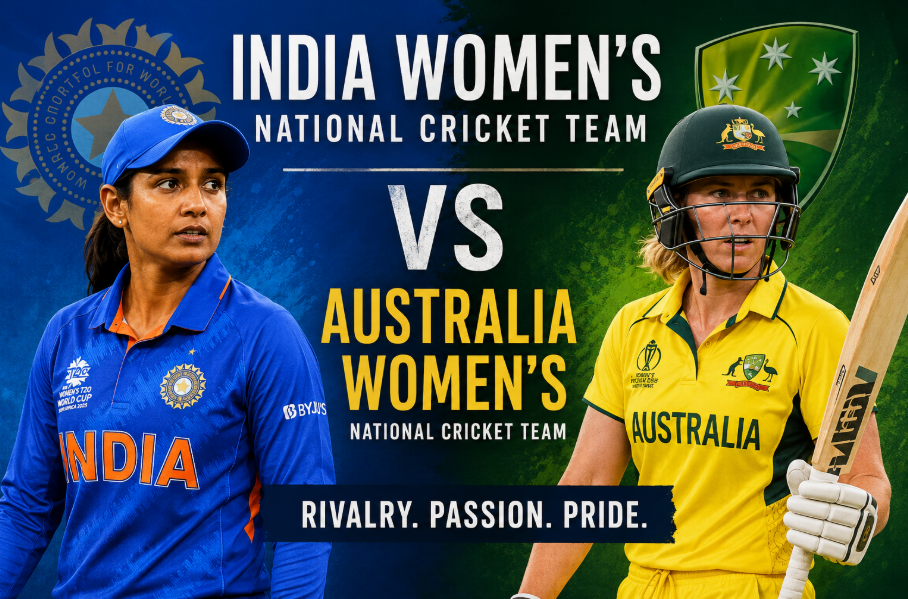
The rivalry between India women’s national cricket team and Australia women’s national cricket team has grown into one of the most compelling matchups in modern women’s cricket. What began as a one-sided contest gradually transformed into a high-intensity battle shaped by evolving skill, strategy, and belief. Australia’s early dominance, driven by depth and discipline, set the benchmark, while India’s rise introduced resilience and fearless batting. Across ODIs and T20Is, their encounters have produced defining scorecards, emotional finishes, and standout individual performances. This rivalry now represents not just wins and losses, but a shifting balance of power in global women’s cricket.
| Team | ODI Rank | T20I Rank |
|---|---|---|
| Australia | 1 | 1 |
| India | 3 | 3 |
| Format | Total Played | Australia Wins | India Wins | Tied | No Result / Drawn |
|---|---|---|---|---|---|
| Test | 11 | 5 | 1 | 0 | 5 |
| ODI | 54 | 43 | 11 | 0 | 0 |
| T20I | 38 | 27 | 9 | 1 | 1 |
| Team | Matches | Won | Lost | Drawn | Highest Score | Lowest Score |
|---|---|---|---|---|---|---|
| Australia | 11 | 5 | 1 | 5 | 473 | 213 |
| India | 11 | 1 | 5 | 5 | 406 | 134 |
| Team | Matches | Won | Lost | Tied | No Result | Highest Score | Lowest Score |
|---|---|---|---|---|---|---|---|
| Australia | 54 | 43 | 11 | 0 | 0 | 338 | 77 |
| India | 54 | 11 | 43 | 0 | 0 | 339 | 100 |
| Team | Matches | Won | Lost | Tied | No Result | Highest Score | Lowest Score |
|---|---|---|---|---|---|---|---|
| Australia | 38 | 27 | 9 | 1 | 1 | 211 | 89 |
| India | 38 | 9 | 27 | 1 | 1 | 187 | 62 |
The rivalry between India women’s national cricket team and Australia women’s national cricket team began with a clear imbalance, as Australia’s structured dominance in women’s cricket overshadowed India’s developing squad. In the early ODI encounters, Australia relied on disciplined bowling attacks and deep batting line-ups, while India leaned heavily on individual brilliance from players like Mithali Raj and Jhulan Goswami. These matches were less about rivalry intensity and more about learning curves. Australia frequently posted strong totals and restricted India with tight fielding setups. However, India slowly began adapting to international pressure, showing signs of resilience in middle overs. These early clashes built the foundation of a rivalry that would later become one of the most competitive in women’s cricket history.
Early Rivalry Performance Table
| Team | Matches | Wins | Win % | Key Strength |
|---|---|---|---|---|
| Australia Women | 18 | 16 | 88 | Batting depth & bowling control |
| India Women | 18 | 2 | 12 | Emerging batting talent |
| Overall Phase | 18 | Learning stage rivalry |
As ODI cricket developed, the gap in consistency between both teams became evident in scorecards. Australia’s top order regularly built strong partnerships, often crossing 250+ totals with ease. Their bowlers exploited India’s middle-order instability, causing frequent collapses. India Women showed glimpses of fight, especially through resilient innings by experienced batters, but lacked finishing strength. These matches highlighted Australia’s tactical superiority in rotating bowlers and maintaining pressure. India’s bowling, led by Jhulan Goswami, occasionally restricted Australia but lacked support from the other end. Each ODI scorecard from this phase reflects a clear pattern: Australia dominating key phases while India struggled to convert starts into match-winning totals.
ODI Phase Performance Table
| Team | Matches | Wins | Avg Score | Dominant Phase |
|---|---|---|---|---|
| Australia Women | 30 | 26 | 265+ | Top-order dominance |
| India Women | 30 | 4 | 210+ | Middle-order resistance |
| Overall Phase | 30 | One-sided ODI era |
The arrival of T20 internationals changed the rhythm of the rivalry between India Women and Australia Women. India Women began adopting a more aggressive batting style, introducing attacking openers and faster scoring rates. However, Australia Women maintained their trademark precision, using variations in pace and disciplined bowling plans to restrict India’s power hitters. Matches became closer, with several games decided in the final overs. India’s young players started challenging Australia’s experienced core, especially in powerplay overs. Australia still held the upper hand, but the gap began narrowing. These T20 scorecards reflect rising competitiveness, with India slowly transforming from underdogs into serious challengers capable of upsetting Australia on their day.
T20 Rivalry Performance Table
| Team | Matches | Wins | Avg Score | Match Style |
|---|---|---|---|---|
| Australia Women | 25 | 18 | 155+ | Controlled aggression |
| India Women | 25 | 7 | 145+ | Powerplay attacking |
| Overall Phase | 25 | Competitive T20 growth |
In ICC events, the rivalry between India Women and Australia Women reached a new level of intensity. Knockout matches and group-stage battles brought pressure-driven performances where every run mattered. Australia Women consistently showed mental strength in high-pressure situations, often accelerating in death overs and defending totals with clinical bowling. India Women, however, produced moments of brilliance in major tournaments, pushing Australia harder than in bilateral series. These matches often featured dramatic score swings, with early wickets shaping final outcomes. Tactical decisions like batting order changes, bowling rotations, and field placements became decisive. ICC scorecards from these clashes highlight Australia’s edge in execution, but India’s growing ability to challenge in big moments.
ICC Tournament Performance Table
| Team | Matches | Wins | Knockout Wins | Pressure Handling |
|---|---|---|---|---|
| Australia Women | 15 | 12 | 8 | Elite execution |
| India Women | 15 | 3 | 2 | Improving resilience |
| Overall Phase | 15 | High-pressure rivalry |
In the modern era, India Women vs Australia Women matches have become significantly closer, reflecting the evolution of women’s cricket globally. India Women have developed stronger batting depth and improved death bowling strategies, reducing Australia’s dominance. Australia Women still rely on their experienced core and tactical discipline, but India now regularly pushes matches into the final overs. Recent scorecards show lower winning margins and more competitive totals. Fitness, strike rotation, and fielding standards have also improved for India. Australia continues to excel in consistency, but India’s rise has turned this rivalry into one of the most exciting contests in women’s cricket today.
Modern Phase Performance Table
| Team | Matches | Wins | Avg Margin | Competitiveness |
|---|---|---|---|---|
| Australia Women | 20 | 13 | 35 runs | Still dominant |
| India Women | 20 | 7 | 20 runs | Strong challenge |
| Overall Phase | 20 | Highly competitive era |
The India Women vs Australia Women rivalry stands as a story of evolution, dominance, and resistance in world cricket. While Australia Women built their legacy through consistency, tactical strength, and championship mentality, India Women have steadily closed the gap with improved batting depth and fearless match approaches. Every phase of this rivalry tells a different story through scorecards, from early one-sided contests to modern thrillers decided in final overs. The battles between these two sides continue to shape women’s cricket standards globally. As both teams progress, this rivalry promises even more intensity, closer finishes, and unforgettable moments in future international encounters.
1. Why is the rivalry between India Women and Australia Women so important?
The rivalry between India women’s national cricket team and Australia women’s national cricket team is important because it represents the gap and growth in women’s cricket. Australia’s dominance and India’s rapid rise have created highly competitive and emotionally charged matches across ODIs and T20Is.
2. Which team has won more matches historically?
Australia Women have historically dominated the rivalry, winning the majority of ODIs and T20Is. Their depth in batting and world-class bowling attack has given them a strong edge over India Women in most bilateral and ICC encounters.
3. What was the turning point in this rivalry?
The 2017 ICC Women’s World Cup was a major turning point. India Women’s performance, especially the fearless batting display, showed they could challenge Australia Women in high-pressure matches and changed global perception of the rivalry.
4. Which players have influenced this rivalry the most?
Key players include Mithali Raj and Jhulan Goswami for India Women, while Australia Women have relied on legends like Meg Lanning and Ellyse Perry. These players shaped many match-winning performances and iconic scorecards.
5. Why are recent matches more competitive?
Recent matches are more competitive because India Women have improved batting depth, fitness, and bowling variations. Australia Women still lead overall, but modern scorecards show narrower margins and more matches going down to the final overs.