Physical Address
304 North Cardinal St.
Dorchester Center, MA 02124
Physical Address
304 North Cardinal St.
Dorchester Center, MA 02124
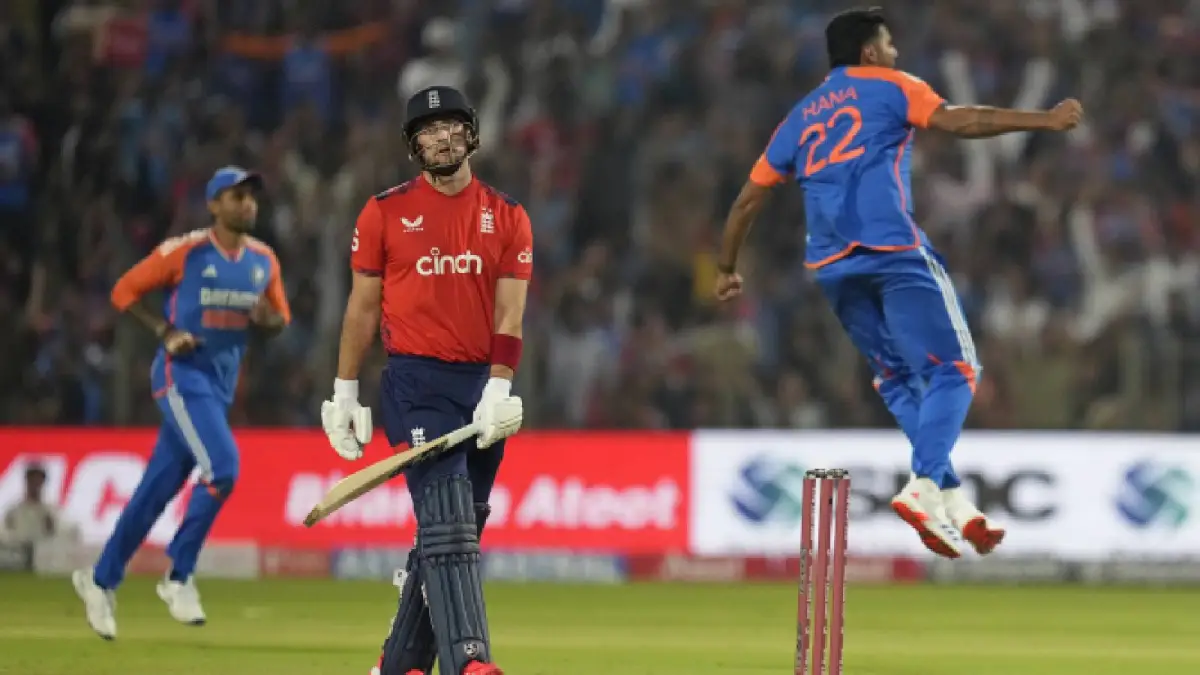
The clash between India and England in this high-stakes ODI encounter delivered a gripping showcase of tactical discipline, pressure handling, and world-class bowling. Played in front of a packed stadium and millions of global viewers, the match reflected the intensity of modern limited-overs cricket. India posted a competitive total built on a strong top-order foundation, while England struggled to find rhythm against relentless spin and pace variations. The game gradually shifted as wickets fell in clusters, reshaping momentum after every phase. Ultimately, India’s control with the ball proved decisive, sealing a memorable victory that reinforced their dominance in home conditions.
This ODI contest between India and England was part of a major ICC tournament group-stage battle. Both teams entered with strong reputations, but contrasting recent form added extra intrigue. India relied heavily on their top-order consistency and spin depth, while England looked for aggressive intent from their batting lineup.
The pitch offered early assistance to seamers but slowed down significantly as the match progressed, bringing spinners into play. India adapted better to these changing conditions, particularly in the second innings where their bowling unit executed plans with precision.
| Category | India | England |
|---|---|---|
| Venue | Lucknow | Lucknow |
| Format | ODI | ODI |
| Toss | Bat first | Bowl first |
| First Innings | 229/9 (50 overs) | – |
| Second Innings | – | 129 all out (34.5 overs) |
| Result | India won by 100 runs | Lost |
| Player of Match | Mohammed Shami | – |
Explanation
The match summary highlights India’s complete dominance after posting a competitive total. England’s decision to bowl first initially looked reasonable due to early seam movement, but the surface slowed down sharply. India’s 229 proved more than enough as England collapsed under scoreboard pressure and disciplined bowling. The 100-run margin reflects a one-sided second innings despite a balanced start to the match.
England won the toss and opted to bowl first, aiming to exploit early moisture and swing. India, on the other hand, were comfortable batting first, trusting their top order to set a defendable total.
India’s strategy focused on preserving wickets for a late acceleration, while England planned to chase under lights expecting better batting conditions. However, the pitch behaved contrary to expectations, rewarding bowlers who varied pace and length.
India’s innings was built around patience and controlled aggression. Rohit Sharma anchored the innings with a fluent 87, blending caution with timely boundaries. Suryakumar Yadav’s 49 added momentum in the middle overs, while KL Rahul contributed a steady 39.
However, England’s bowlers struck at regular intervals, preventing India from accelerating beyond 250. The lower order chipped in crucial runs to push the total to a competitive level.
| Batter | Runs | Balls | 4s | 6s | Dismissal |
|---|---|---|---|---|---|
| Rohit Sharma | 87 | 101 | 9 | 2 | Caught |
| KL Rahul | 39 | 58 | 3 | 0 | Bowled |
| Suryakumar Yadav | 49 | 47 | 5 | 1 | LBW |
| Virat Kohli | 0 | 5 | 0 | 0 | Bowled |
| Hardik Pandya | 14 | 20 | 1 | 0 | Caught |
| Ravindra Jadeja | 8 | 12 | 0 | 0 | Run out |
| Others | 32 | ||||
| Total | 229/9 | 50 overs |
Explanation
India’s batting was anchored by Rohit Sharma’s composed century attempt, which set the tone early. Suryakumar’s attacking stroke play ensured momentum during the middle overs. However, England’s bowlers managed breakthroughs at key intervals, preventing a late surge. Despite losing wickets, India’s depth ensured a defendable total, which later proved decisive.
| Bowler | Overs | Runs | Wickets | Economy |
|---|---|---|---|---|
| Jofra Archer | 10 | 58 | 2 | 5.80 |
| Mark Wood | 10 | 62 | 1 | 6.20 |
| Chris Woakes | 10 | 49 | 2 | 4.90 |
| Adil Rashid | 10 | 55 | 1 | 5.50 |
| Sam Curran | 10 | 70 | 2 | 7.00 |
Analysis:
England’s bowling attack was effective in bursts but lacked consistency in the death overs. Woakes maintained excellent control, but Sam Curran’s expensive final spell allowed India to accelerate significantly. Archer and Wood generated pace but were neutralized by smart batting from India’s top order.
England’s chase never settled. Early wickets created pressure, and the required rate climbed quickly. Jasprit Bumrah’s new-ball spell set the tone, followed by Mohammed Shami’s devastating reverse swing and Kuldeep Yadav’s spin dominance.
England lost wickets in clusters, with no partnership crossing significant resistance. The batting collapse was systematic rather than accidental, highlighting India’s superior execution.
| Batter | Runs | Balls | 4s | 6s | Dismissal |
|---|---|---|---|---|---|
| Jonny Bairstow | 12 | 18 | 2 | 0 | Bowled |
| Joe Root | 33 | 52 | 3 | 0 | Caught |
| Dawid Malan | 18 | 26 | 2 | 0 | LBW |
| Ben Stokes | 21 | 30 | 2 | 1 | Caught |
| Jos Buttler | 14 | 19 | 1 | 0 | Bowled |
| Lower order | 31 | Collapsed | |||
| Total | 129 all out | 34.5 overs |
Explanation
England’s batting collapse was driven by consistent pressure from India’s bowling attack. No batter was able to settle into a rhythm, and wickets kept falling before partnerships could form. The top order failed to convert starts, while the middle order succumbed to spin pressure. The lack of resistance in the lower order confirmed India’s complete control.
| Bowler | Overs | Runs | Wickets | Economy |
|---|---|---|---|---|
| Jasprit Bumrah | 7 | 32 | 3 | 4.57 |
| Mohammed Shami | 6.5 | 22 | 4 | 3.21 |
| Kuldeep Yadav | 8 | 24 | 2 | 3.00 |
| Ravindra Jadeja | 10 | 29 | 1 | 2.90 |
| Hardik Pandya | 5 | 18 | 0 | 3.60 |
Explanation
India’s bowling unit operated with exceptional discipline. Shami’s reverse swing dismantled England’s middle order, while Bumrah’s early breakthroughs created immediate pressure. Kuldeep’s spin variation further tightened control in the middle overs. The combined effect ensured England never recovered from early setbacks, making the chase one-sided.
| Wicket | Players | Runs | Impact |
|---|---|---|---|
| 1st Wicket | Rohit & Rahul | 68 | Stable start |
| 3rd Wicket | Rohit & SKY | 91 | Match-defining stand |
| 6th Wicket | Stokes & Root | 42 | Brief resistance |
Explanation
The partnership between Rohit Sharma and Suryakumar Yadav was the backbone of India’s innings. It provided stability and momentum simultaneously. England’s only notable resistance came from Stokes and Root, but it was too short-lived to influence the result.
| Player | Performance | Impact |
|---|---|---|
| Mohammed Shami | 4/22 | Match-winning spell |
Explanation
Shami’s spell was the turning point. His ability to extract movement and reverse swing dismantled England’s chase. His breakthroughs ensured India never lost control of the game after the first innings.
India defeated England by 100 runs in a commanding performance that reinforced their strength in home conditions and ICC tournaments. The victory highlighted India’s balanced squad, especially their bowling depth, which proved decisive on a tricky surface.
For England, the match exposed vulnerability against quality spin and reverse swing. The result had major implications for group standings and momentum heading into the next fixtures.
What was the result of India vs England match?
India won the match by 100 runs after defending a total of 229/9. England were bowled out for 129 in a dominant bowling performance by India. The result highlighted India’s superiority in both batting control and bowling execution under pressure conditions.
Who was the top performer in the match?
Mohammed Shami was the standout performer with a match-winning spell of 4 wickets for just 22 runs. His ability to generate reverse swing and break partnerships at crucial moments made him the decisive factor in India’s comfortable victory.
Why did England lose the match?
England lost due to their batting collapse under pressure and inability to handle spin and reverse swing. After a steady start, they lost wickets in clusters and failed to build partnerships, eventually falling well short of the target.
What was the turning point of the match?
The turning point was Shami’s spell in the middle overs, where he picked up quick wickets and broke England’s middle order. This shifted momentum completely in India’s favor and left England with no realistic chance of recovery.
How did India set up their victory?
India set up their win through a balanced batting effort led by Rohit Sharma and Suryakumar Yadav. Their total of 229 proved competitive, and the bowlers executed a disciplined plan that exploited pitch conditions perfectly.
What makes this match significant?
This match is significant because it showcased India’s dominance in ICC conditions and highlighted England’s struggles against high-quality spin bowling. It also strengthened India’s position in the tournament standings and boosted team confidence.